Table of Contents
Rotary kiln explosions are rare — but when they occur, the consequences are severe. Production can be halted for months, critical equipment can be destroyed, and most importantly, workers can be seriously injured or killed.
Preventing these events requires more than good intentions. It demands proper training, robust control systems, and engineered explosion mitigation. For facilities operating rotary kilns, explosion relief is a critical part of that protection strategy.
What Is a Rotary Kiln?
Rotary kilns are widely used in calcination processes to manufacture materials such as:
- Cement
- Lime
- Vermiculite
- Titanium dioxide
In cement production, for example, limestone is heated to approximately 1,000°C (1,922°F) to drive off carbon dioxide and produce calcium oxide.
A rotary kiln is essentially a large, slightly inclined rotating tube. Raw material enters at the upper end and slowly moves downward as the kiln rotates, while hot gases heat the material. Processed product exits at the lower end, while exhaust gases exit from the opposite side.
Heating may be direct (with a burner firing into the kiln) or indirect (where heated gas is introduced separately).
These systems operate at high temperatures and rely on carefully controlled fuel-to-air ratios — conditions that can create explosion hazards if not properly managed.
Why Rotary Kiln Explosions Occur
Rotary kiln explosions typically result from an imbalance of fuel, air, and ignition sources.
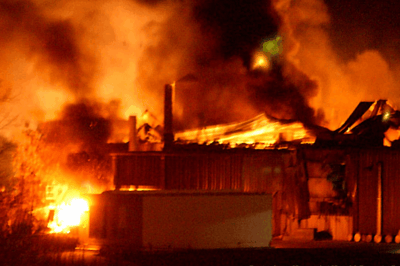
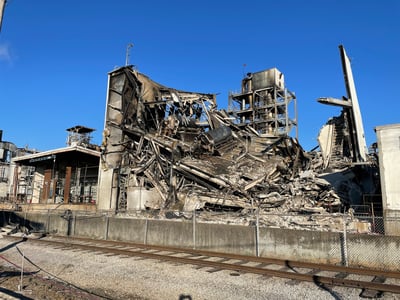
A well-documented incident occurred in 2018 when a rotary lime kiln explosion caused multiple fatalities and significant financial losses. Investigators determined that a combustible gas-air mixture remained in the kiln prior to ignition because proper purging procedures were not completed.
Common contributing factors include:
- Failure to properly purge air before burner ignition
- Incorrect fuel-to-air ratios
- Incomplete combustion
- Dust accumulation inside the system
- Delayed response from monitoring systems
Because rotary kilns are confined systems handling hot gases and combustible materials, pressure can rise rapidly if ignition occurs under the wrong conditions.
Preventing Rotary Kiln Explosions
Prevention begins with training and procedures.
Operators and maintenance personnel must understand:
- Safe startup and shutdown protocols
- Proper purging procedures
- Fuel and air ratio management
- Emergency response procedures
Instrumentation and monitoring systems are equally important. Effective kiln safety systems often include:
- Air pressure measurement
- Inlet temperature measurement
- Gas flow monitoring
- Gas pressure monitoring
- Outlet humidity monitoring
- Flame detectors
- Gas analyzers
- Safety shutoff valves
These components should be integrated into an automated control system capable of detecting unsafe conditions and shutting down operations quickly.
However, even well-designed control systems may not react fast enough in every scenario.
Why Explosion Relief Is Essential in Rotary Kilns
If a combustible gas mixture ignites inside a rotary kiln, internal pressure can spike within milliseconds. In some cases, control systems cannot respond quickly enough to prevent damage.
This is where engineered explosion relief becomes critical.
Philadelphia Safety Devices (PSD) designs reusable explosion relief doors that open rapidly when internal pressure reaches a calibrated setpoint. By venting expanding gases in a controlled direction, PSD doors help:
- Reduce peak internal pressure
- Protect kiln structure and surrounding equipment
- Minimize secondary damage
- Improve worker safety
Unlike single-use rupture panels, PSD explosion relief doors are reusable and recalibratable. They are engineered to open at low preset pressures, helping mitigate overpressure before structural failure occurs.
In high-temperature, high-energy systems like rotary kilns, fast response and low inertia matter. PSD doors are designed to activate in milliseconds, making them effective for rapid pressure pulses.
Proper Sizing and Engineering Matter
Explosion relief devices must be properly sized based on:
- Kiln volume and geometry
- Fuel type and combustion characteristics
- Maximum allowable vessel pressure
- Applicable standards such as NFPA 68
An undersized vent may not relieve pressure quickly enough. An oversized or improperly located device may not provide effective protection.
PSD works with facility engineers to review process conditions and recommend appropriately sized explosion relief doors and hatches.
Protecting Your Rotary Kiln Operation
Rotary kilns operate under extreme conditions. While proper training and instrumentation reduce risk, engineered explosion relief provides a critical layer of protection when prevention systems are not enough.
If your facility operates a rotary kiln, evaluating explosion mitigation should be part of your overall safety strategy.
PSD explosion relief doors are designed to respond quickly, open at low calibrated pressures, and help protect both equipment and personnel from the devastating effects of overpressure events.
Why take chances with kiln safety when engineered protection is available?