Combustible Dust: Real-World Examples and How to Protect Your Facility
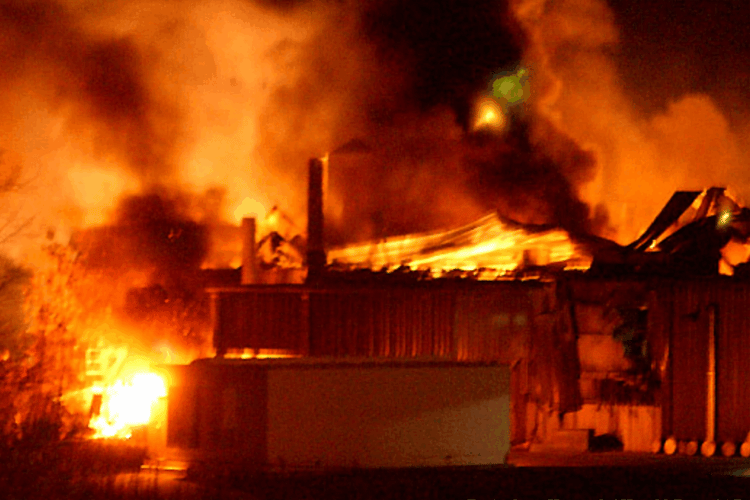
Table of Contents
On February 7, 2008, a massive explosion tore through the Imperial Sugar refinery in Savannah, Georgia. Fourteen people lost their lives and dozens were injured. Investigators later determined that accumulated sugar dust ignited inside the facility, triggering a catastrophic dust explosion.
This tragedy highlighted a critical truth: combustible dust is not rare — and it is not limited to a few high-risk industries. It exists in food processing plants, metal facilities, pharmaceutical operations, agricultural sites, and more.
For facilities handling fine particulate materials, understanding combustible dust risk — and installing proper explosion protection — is essential.
What Is Combustible Dust?
OSHA defines combustible dust as fine particles that present a fire, flash-fire, deflagration, or explosion hazard.
This includes:
- Powders
- Dusts
- Fines
- Fibers
- Flakes
- Metal shavings
- Chips and turnings
If a material can burn, it can often explode when dispersed as dust in the right conditions.
How Combustible Dust Explosions Occur
Dust explosions require five elements, often referred to as the “Dust Explosion Pentagon”:
- Oxygen
- Fuel (combustible dust)
- Ignition source (spark, heat, friction, static discharge)
- Dispersion of dust in the proper concentration
- Confinement within a vessel or structure
When these elements combine, a rapidly expanding fireball can develop inside enclosed equipment such as dust collectors, silos, dryers, or process vessels.
If pressure cannot be relieved quickly, the vessel may rupture — causing structural damage, injuries, and even fatalities.
Common Examples of Combustible Dust Materials
Many materials not typically considered “flammable” can become explosive in dust form. Examples include:
Food & Agricultural Materials
- Sugar
- Corn starch
- Soy flour
- Powdered milk
- Powdered whey
- Tapioca flour
- Egg white powder
Wood & Organic Materials
- Sawdust
- Wood flour
- Charcoal dust
- Peat
- Cork dust
Metals
- Finely divided aluminum
- Magnesium
- Iron
- Zinc
- Bronze
Industrial & Chemical Materials
- Phenolic resin
- Sulfur
- Ground coal
- Lactose
- Ascorbic acid
- Lead stearate
The risk increases when fine particles accumulate in overhead areas, ductwork, or on structural supports where they may go unnoticed until disturbed.
Additional Real-World Dust Explosion Incidents
Unfortunately, the Georgia refinery explosion was not an isolated event.
- Pet Food Plant (2014, Arizona): Grain dust ignited during maintenance activity, severely injuring workers.
- Corn Milling Facility (2017, Wisconsin): A grain dust explosion resulted in a fatality and significant OSHA penalties.
- Pharmaceutical Plant (2009, North Carolina): Fine plastic powder accumulated above a suspended ceiling ignited, killing six workers.
In many cases, investigations reveal similar causes: dust accumulation, inadequate ventilation, and insufficient explosion protection.
How PSD Explosion Relief Doors Help Mitigate Risk
When a dust deflagration occurs inside a vessel, internal pressure rises extremely fast. If that pressure exceeds the structural strength of the equipment, rupture occurs.
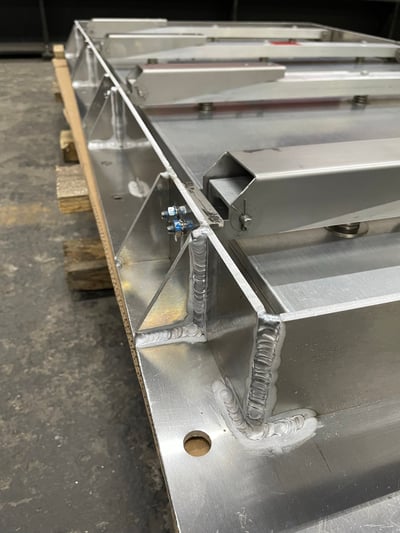
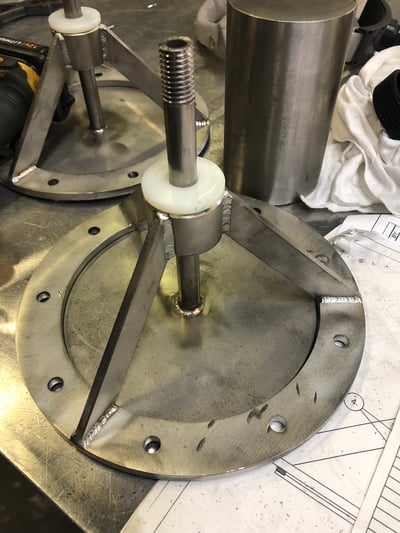
Philadelphia Safety Devices (PSD) manufactures reusable explosion relief doors designed to open at calibrated overpressure levels — before the vessel reaches its failure point.
PSD explosion relief doors:
- Open at preset pressures as low as 6″ water column (0.22 psi)
- Can be calibrated up to 24″ water column (0.87 psi)
- Activate in milliseconds
- Vent overpressure safely and predictably
- Are reusable and recalibratable
Unlike single-use rupture panels, PSD doors open and reseat, reducing downtime and long-term replacement costs.
By releasing pressure early and uniformly across the door surface, PSD systems help keep reduced explosion pressure below the structural limit of the protected equipment.
Protect Your Workers and Your Facility
Combustible dust explosions often occur without warning. Materials that seem harmless in bulk form can become highly explosive when dispersed in air inside confined equipment.
Proper housekeeping and dust management are essential — but they are not enough on their own.
Engineered explosion relief is a critical layer of protection.
If your facility handles combustible dust, evaluating your explosion protection strategy is not optional — it’s a responsibility.
PSD explosion relief doors are designed to provide reliable, low-pressure activation and fast response when it matters most.
Protect your people. Protect your equipment. Protect your operation.