Common Rupture Disc Problems and How to Avoid Them
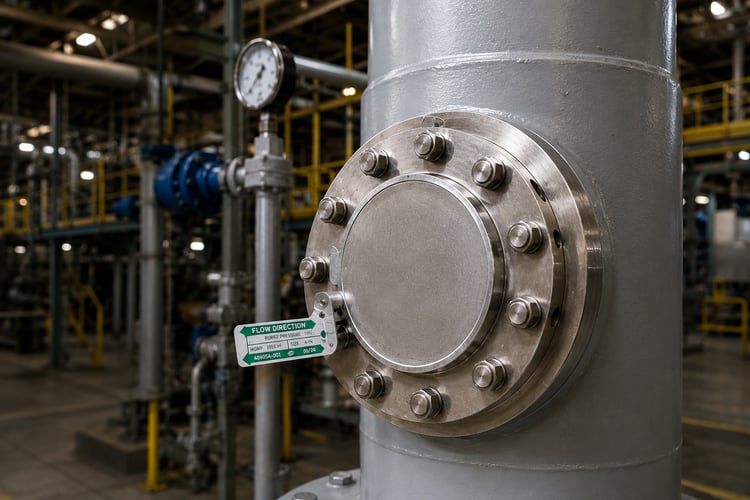
Table of Contents
Common Problems Associated with Rupture Discs
Introduction
Rupture discs have long been used to protect industrial equipment from dangerous overpressure events. Found on process vessels, dust collectors, silos, chemical processing equipment, and storage systems, rupture discs are designed to burst at a predetermined pressure to help prevent catastrophic equipment failure.
When properly selected and maintained, rupture discs can be an effective component of an explosion protection strategy. However, like any safety device, they are not without challenges.
Understanding the most common rupture disc problems can help facility operators improve reliability, reduce downtime, and maintain a safer operating environment.
How Do Rupture Discs Work?
A rupture disc is a pressure relief device that utilizes a thin metal membrane designed to burst when pressure exceeds a predetermined set point.
The disc is typically installed within a holder or mounted directly to a vessel opening. Under normal operating conditions, the membrane remains intact. When pressure rises beyond the design limit, the membrane ruptures and releases pressure before the vessel itself can fail.
Because rupture discs rely on thin, engineered materials, they are inherently sensitive components that require proper installation, inspection, and maintenance.
Rupture Disc Fatigue
One of the most common issues associated with rupture discs is fatigue.
Many industrial processes utilize:
- Blowers
- Fans
- Compressors
- Rotary valves
- High-speed process equipment
These systems create constant pressure fluctuations, often referred to as pressure cycling.
Over time, these repeated pressure changes can weaken the rupture disc membrane. Eventually, fatigue may cause the disc to fail prematurely or rupture before reaching its intended burst pressure.
Facilities operating continuous processes are particularly susceptible to fatigue-related rupture disc failures.
Installation Errors
Improper installation is another leading cause of rupture disc problems.
Common installation mistakes include:
- Incorrect disc orientation
- Excessive bolt torque
- Uneven flange loading
- Improper gasket installation
- Damage during handling
Because rupture discs are designed to be sensitive, even minor installation issues can affect performance.
A disc that is improperly installed may fail to rupture when needed or may burst prematurely.
Corrosion and Environmental Damage
Industrial environments can be harsh.
Exposure to:
- Moisture
- Corrosive chemicals
- Cleaning agents
- Salt air
- High temperatures
can gradually degrade rupture disc materials.
Corrosion may alter the disc's burst characteristics, weaken the membrane, or create pinhole leaks that compromise system performance.
Routine inspections are essential in applications where corrosion is a concern.
Product Buildup and Blockage
Many industrial processes involve materials that can accumulate on internal surfaces.
Examples include:
- Combustible dust
- Powders
- Food products
- Pharmaceutical ingredients
- Chemical residues
When buildup occurs near a rupture disc, it can partially block the vent opening or interfere with the disc's ability to function as intended.
This may result in:
- Delayed activation
- Higher-than-expected burst pressures
- Reduced venting capacity
Proper equipment design and maintenance can help minimize these risks.
Piping and Support Issues
The design of discharge piping can significantly impact rupture disc performance.
Common issues include:
- Long unsupported pipe runs
- Excessive pipe weight
- Misaligned flanges
- Vibration transfer
- Improper support structures
These conditions can place unintended loads on the rupture disc assembly and contribute to premature failure.
Proper piping design should always be considered part of the overall pressure relief system.
Maintenance Challenges
Although rupture discs contain few moving parts, they still require periodic inspection.
Maintenance personnel should routinely check for:
- Corrosion
- Fatigue cracking
- Product buildup
- Damaged gaskets
- Leaks
- Improper installation conditions
Unlike reusable pressure relief devices, rupture discs generally cannot be repaired once damaged.
If an issue is identified, replacement is typically required.
Downtime Following Activation
One of the most significant drawbacks of rupture discs is that they are single-use devices.
Once a rupture disc bursts:
- Production may need to stop
- The damaged disc must be removed
- A replacement disc must be sourced
- Installation and inspection must be completed
Depending on the application, this process can result in significant downtime.
For facilities operating continuous production processes, even a few hours of downtime can have a meaningful financial impact.
When to Consider Alternatives
While rupture discs remain a common explosion protection solution, they are not always the best option for every application.
Facilities that prioritize:
- Reduced downtime
- Long service life
- Lower lifecycle costs
- Reusability
often evaluate alternative pressure relief technologies.
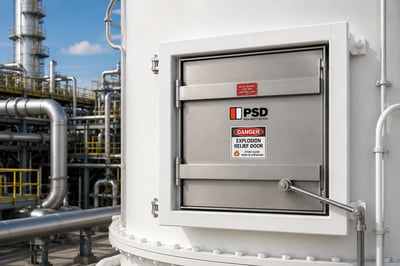
One such option is a reusable explosion relief door.
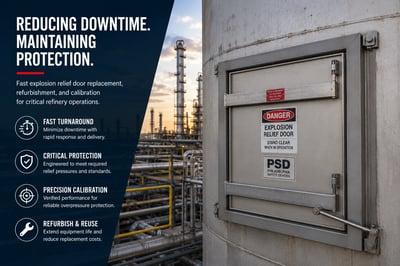
Unlike rupture discs, reusable explosion relief doors are designed to open during an overpressure event and then be returned to service following inspection and reset procedures. This can significantly reduce downtime and replacement costs in certain applications.
The appropriate solution depends on operating conditions, process requirements, maintenance capabilities, and overall facility objectives.
Choosing the Right Explosion Protection Strategy
Every industrial process presents unique challenges.
When evaluating rupture discs and other pressure relief technologies, facility operators should consider:
- Operating pressure
- Process characteristics
- Maintenance requirements
- Environmental conditions
- Downtime costs
- Regulatory requirements
Working with an experienced explosion protection manufacturer can help ensure the most appropriate solution is selected.
Need Help Evaluating Your Explosion Protection System?
PSD designs and manufactures explosion relief doors, explosion relief vents, and vacuum relief valves for industrial facilities worldwide.
Whether you're evaluating rupture discs, planning a system upgrade, or exploring reusable alternatives, our engineering team can help identify the right solution for your application.
Contact PSD today to discuss your explosion protection requirements.